Tuesday, March 22, 2011

Life Long Learning - Maximize the Experience

Life-long learning is no longer an option. It is a mandatory part of being involved in business.


With the world around us rapidly advancing, and statistics that show we may have up to seven careers, over a life-time, continuous professional development is more critical than ever. The learning can happen formally, through either a traditional classroom, or on-line, or at meetings and conferences. One of the keys to learning is creating opportunities for meaningful engagement with your community of learners and the generating of shared ideas.

When it has been identified that a meeting or conference is the best way to share information by a community - organization, association, school, social group, social / professional group for example, then it must be determined the best way to bring this community together.

The method you choose for delivery will have several factors that will play into this decision and may include


  1. What - the content you will deliver
  2. Who - and the potential learner expectations; goal of the learning ie. Highly technical or more tactile
  3. The driver of the learning, ie. Credits or extended credits required, personal development or a desire to share information
  4. How will you include spaces and times for the networking that is important?
  5. Is there a reason for celebration in the context of this particular meeting?
  6. How - the methods of delivery
  7. Where - origin of the attendees, the delivery destination, and then environment(s) you will deliver it in
  8. When - time of year, days of week, time required overall
    • and how immediate is the need
  9. Why is there a meeting - find clarity among your stakeholders! First, the goals of meeting. Are you seeking to educate? Motivate? Change perceptions? Affect change? Create a greater sense of community? 
Once you have determined the above, you may also consider other current models to share knowledge and engage community which may include a hybrid element, where a virtual audience may be included through the use of live feeds of learning streams, an opportunity to post questions and have dialogue with other remote and in-room learners via a moderated forum (such as a twitter stream). There are many advantages to this including geography, limits on time, financial considerations and primarily, the opportunity for pre and post engagement with the community members.

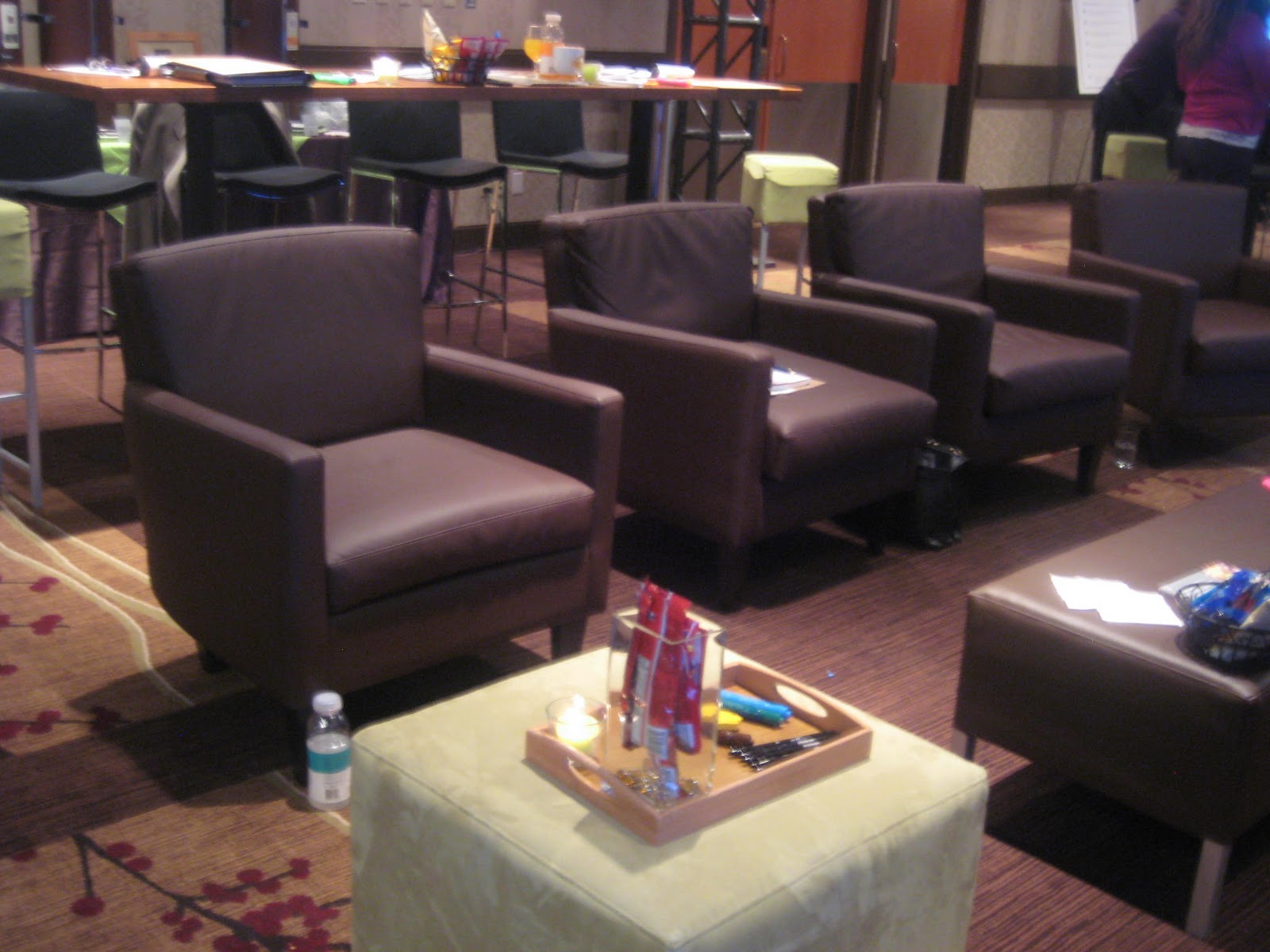
Now you have decided how you are going to bring people together, where, when and why, the next step is choosing the location and then setting an environment and designing programming that will actively engage learners, allowing for maximum take-aways. Consider alternative locations and room set-ups. Get out of the front facing theatre and get people talking to each other. If you have a keynote, have followup discussion pods, as an example. How to increase retention and motivation to do something with the information are key factors in what happens next, and in how valuable your attendees will find the meeting, especially when they reflect back, and consider your meeting for next year's budget planning - so pull out all the stops you can, take some calculated risks, and help people improve their life-long learning experience.

Any comments on how you are engaging your communities? Please share your thoughts!

Saturday, March 12, 2011

Food and Beverage Planning (the basics - a long one)

"What keeps me motivated is not food itself, but all the bonds & memories the food represents."~Julia Child

Buffet at the Fairmont Pacific Rim


So it is time to plan the food and beverage program for your upcoming meeting. For some, this is a passion, and they cannot wait to dig into the menus, discussion with Chefs and sommeliers, and to create a program that is delicious, nutritious and memorable. For others, it unleashes dread. For others, it means opening up the standard menu packages sent by the venues, and making selections. In this post I am going to look at the basic considerations when planning a food and beverage program. Future posts will provide fodder for the foodies and event geeks (like me) that live for this part.

Of course, budget will always play a factor, and it has to include the cost of food, labour / service, potentially rentals - particularly for offsite functions or functions that exceed the "normal" capacity of the venue you are working with, beverage selections, and then on top of these costs there will always be a mandatory service charge (sometimes erroneously referred to as a gratuity) and then the taxes. If someone else is doing all of the planning on your behalf, including menu selections, management, minding the details of any special requirements and more, then there may also be a management fee (generally well earned) for this service as well. So as you begin, here is the basic information your caterer will require.

a. Who are you planning for
• Number of guests
• Men or women
• Age of participants - average range and if there are children
• Activity level of the day or event
• Guest expectations
• Origin of guests

b. What are you planning
• Multi day program
• One off event
• Day of meeting including more than one meal

c. When are you feeding them
 • Time of day / meal
• Time of year


d. Where
• What country are you in
• What country(ies) are your participants from / food preferences / food styles
• Are you in a hot or cold climate?
• Are you eating inside or outside?

e. WHY are you feeding them
• To control costs (ie vs receiving unknown expense accounts later)
• As part of a meeting ie. Working lunch or coffee break
• As part of an activity - from a horseback picnic to a glacier reception or lunch on a ski or atv day
• As part of an awards function - often a dinner setting
• As a way to have them all seated together and interacting
• As part of a team building exercise where they contribute to the meal
 f. Style of the meal
• Formal, plated with a presentation
• Formal, plated, to create a feeling of "special"
• Formal, but buffet, for reasons of time or selection
• Informal, buffet
• Is it rollups or multiple place settings
• Compostable disposables or china
• Paper napkins or linen
• At rounds or at long empire style tables
• Mix of standing and seating, reception style

g. What will you serve
• Which meal is it and what else is happening at that time
• What is available (or not) in the region you are in? What regional specialties will your guests be willing to try / will not likely enjoy?
• What do your guests typically eat at the meal you are planning ie. Breakfast to an American is very different from European or Asian expectations
• Nutritional considerations
• Special needs considerations - allergies, vegetarian / vegan, kosher, halal, gluten free, diabetic / carb counts etc.
• Balance of meals over a program
• Which beverages will be served when

The reality is that over a multiple day program, you may have all of these. It might start with an informal welcome reception with a buffet reflective of the region you are meeting in and go from here. Breakfast might include meetings or presentations, or round-table networking, or perhaps you even have a breakfast in bed served, or breakfast at leisure or on their own. Lunch may include seated lunches with formal presentations, or on a trade show floor to drive traffic to this area, or buffet style to allow for more flexibility for guests in making their own choices. You may host or have included in your program by sponsors or committees receptions, offering generally more stand-up space, cocktail / cruiser tables, bars (hosted or cash) and bite size or small plate offerings. Dinners can range from a casual bbq where the hip of beef arrives on a pitchfork (really!) to a beachside seafood feast, a clambake or a four or five course formal dinner in a ballroom with formal presentations and dancing. Really, the only limits on what happens with food are your imagination, budget, understanding your group's preferences and needs, and finally what each Chef brings to the table.

Food and beverage management is truly an art unto itself, and one that once embraced, there is no looking back. Leave your personal preferences aside, and if this is something you are not comfortable with, enlist the help of others, in your office or on your catering team. Keep following for more fun tips and ideas!

The final reality... sometimes they just want to eat a donut. Homer Simpson and the Last Soul Donut

Sunday, March 6, 2011

Balance... ummmm yeah

From Dictionary.com - Balance has 31 definitions. I have chosen two I find most appropriate to what balance means when it comes to life, and in particular the life of an event professional (what in the TwitterVerse we call #eventprofs). I think about this a LOT and @carolyn_ray and @judylaine reminded me yesterday about this word.

Definition (noun)
1. a state of equilibrium or equipoise; equal distribution of weight, amount, etc.
7. the power or ability to decide an outcome by throwing one's strength, influence, support, or the like, to one side or the other.

First let me state, that this concept of "balance" sounds good but seems highly unrealistic in our industry where we are constantly being pulled with multiple demands. I do not know anyone in this field who has an equal amount of work / family and friends / play - recreation - sport / free time in their lives. Let alone enough sleep, or even rest time. Instead we have "work life integration" where we enjoy intersection points that bring our worlds together.

I definitely do not live with scales of balance, my world instead is a kaleidoscope, constantly shifting, full of colour, full of life and movement, always interesting. Always adapting to what is happening now. Like all of us, this can involve multiple ongoing programs/meetings/events, career and/or education, what is happening with our family or friends, and what is happening in the world around us. Most of us are extremely fortunate to have vast worlds open in front of us and finding balance as we scan the world for inspiration is nearly impossible.

Making balance tougher is that we have very little control over most of this - when we are excited about a challenging event, we take it on; when our loved ones need us, we respond; when opportunity opens a door, we go through. Nigel Marsh offers a great TEDx perspective on his perfect day and how we can achieve balance. This is a great video and I suggest squeezing in the ten minutes it takes to watch it! How we all strive for his perfect day, how we all should appreciate the perfect moments.

So what can we do?
  1. First, accept the guilt. It is part of the deal.
  2. Second, appreciate the moments.
  3. Most important, be present for whatever is happening at the moment.
I hold out a (likely false) hope that one day I will achieve this mysterious balance, where the day begins with quiet time and exercise, moves on to a nutritious breakfast enjoyed on a sunny patio, leads into time to garden, read and do some intellectually stimulating work or discussions, and then do something that offers some good back to the world around me, add a delicious fresh lunch, a siesta, and a final meal enjoyed with friends, family and good wine. Unrealistic, pehaps, but that is the balance I can strive for! In the meantime, back to work (even though it is Sunday, the soccer game is over and clients are waiting on information, so on it goes...)

If you have found ways to better achieve balance, I would love to hear your comments.

Friday, February 25, 2011

Our Event Landscape Changed Today

Today MVKA, an iconic Vancouver event production agency announced it was closing. For me, this signals the end of an era. When I entered the industry 18 years ago, Martin was one of the first people I met, and while we know each other through the social fabric of our event community, I have always been impressed with his graciousness, instilled through the entire organization. As an example, last year when we won the bid to produce the Welcome Reception for the MPI WEC in Vancouver, the second email (after hearing we had won) was from JP, the DOS at MVKA, with their congratulations. Soon after they won the bid for the Closing Reception for MPI, and my perception as an attendee was that they rocked this, and took risks with the perception of Vancouver I might not have. Bravo!

MVKA (from the outside) has always been a team of professionals who added to our industry with the high caliber of events they produced, and the ongoing contributions to the industry through various channels. This has been a creative force that has taken chances, elevated the standards and has also continuously shared their passion and ideas with others in the industry. Thank you!

Having been through the closing of an event organization (in 2003) and having survived the impact as one individual affected, I can foreshadow the impact to come on our local industry as these talented individuals find their new paths. I know from experience a little of what will come to pass, as do my compatriots from that time, people I still proudly call friends and whose collective successes we can continue to celebrate. Every single person (including Martin) is about to embark on their own personal journey, and they will all find new successes. What I know for sure, is the opportunities that will come their way may not be what they expect, or had even considered, but are sure to provide clients here and around the world with even more impactful events. I know each each of them will bring their talents and thoughtful creativity to wherever they find themselves next. As we did.

I wish for each member of this team only the best, they deserve it.

Wednesday, February 23, 2011

GMIC - 20 final thoughts

As I have mentioned, I live in Vancouver, where we do consider ourselves sustainable - not perfect but certainly taking some great steps. This week it was awesome to see, as they self - referred, the "Choir" of Green Meeting and Event Professionals at the GMIC event at the Doubletree Portland. By all accounts, a hotel ahead on sustainability, while still maintaining very high standards, excellent food quality and presentation, and yes, the warm cookies. (hello!!)

I blogged to support the (Spruce Almighty) team and became a virtual extension of the event. As they did say in their final wrap-up to keep communicating the message, I have just a few things to continue the conversation. I will note here that I have a lot of thoughts on being green and even more on being sustainable but as I have covered these in the blog links here, I won't rehash my pretty strong feelings and amazing examples. Instead a focus on the awesome information, lessons and next steps that came out of GMIC.
  1. This is the "choir" who must now continue to spread the message of sustainability.
  2. Social gaming, when properly structured, is an amazing tool for increasing the depth and breadth of learning, engagement and relationship building. Make the time to plan for it, communicate it, and promote it. Then debrief it.
  3. Meeting and event professionals are ideally positioned to make huge impacts if we take even small steps on each meeting to make them more sustainable.
  4. As strategists, we need to maintain our seat at the table, and ensure that sustainability is high on the agenda of every event's basic structure.
  5. Open source your knowledge. When we share knowledge we open ourselves up to even more opportunities to learn and grow.
  6. We must consider our entire supply chain, and engage suppliers in discussion about our objectives and expectations around sustainability.
  7. We know sustainability is high on consumer and client wish lists. But "green" is just one factor. They also want to know if the people producing the product are being treated fairly, if there is cooperation, and that we care about where our products are being made and how.
  8. We need to not only engage in discussion, but we need our suppliers and stakeholders to own the process with us and share responsibility for sustainability.
  9. Social media is an amazing tool, not just for hybrid meetings, but also for continuing the discussions and growing the reach of the messages.
  10. The messages must be consistent.
  11. SMART goals are both important, but are also something as event professionals that we can work with our clients and stakeholders to better articulate - leading to meetings that are more productive. (pick the words that fit you best)
    1. S - specific, significant
      M - measurable, meaningful, motivational

      A - agreed upon, attainable, achievable, acceptable, action-oriented

      R - realistic, relevant, reasonable, rewarding, results-oriented

      T - time-based, timely, tangible, trackable
  12. Experimentation in safe environments is important to growth. Accept the growing pains, enjoy the innovations gained along the way. (no experimenting = no innovation)
  13. Collaboration is the most important transformative tool.
  14. Collaboration is "easier" when started face-to-face. It can be started with off-line tools, but it is trickier - off-line is an awesome way to continue the conversations. Indefinitely.
  15. Standards can be sexy. Ask anyone who has given their time (and it takes TIME to reach consensus) to bring one standard after another to fruition.
  16. The only way for standards to become standards is if we engage with and use them.
  17. Think in bulk - save packaging where you can. Bring your own water bottle or mug for example and encourage others to do the same. (hotel soap / shampoo, condiments and so much more)
  18. Apparently bags are on the way out (btw check these out - made from fabric reclaimed before it becomes landfill and sewn by home sewers)
  19. Be a champion. Embrace the challenge. Sustainability is not an option.
  20. Our First Nations ancestors plan ahead for seven generations. What will our world be like in seven generations if we don't step up and take responsibility now? 
    1. Be the change you want to see!  Thank you so much to the board, leaders, speakers, presenters, staff, team and volunteers who all made this happen.
      

Tuesday, February 22, 2011

GMIC - 10 Tweetable Moments

Ah, the tweetable moments... here we go

  1. collaboration = transformation via @mdanimonroe
  2. our mission is clear, be inspired from Pedro from Estoril
  3. Don't see sustainability as penance. via @mitchellbeer
  4. It's about the solutions. Who are the strategiest via @mitchellbeer
  5. be a champion: use standard right for your org, commit to providing feedback, serve as a case study via @LisaKraus
  6. APEX/ASTM standards are misunderstood to be US standards; can be applied globally via @eco_efficient
  7. APEX standards are a living document. The only way to make them perfect is to engage with the process via @hduckworth
  8. leadership and conversation both needed to move forward via @laurelcootePMB
  9. you can be green and run a sustainable business. pay attention to supply chain via @TahiraCreates
  10. f2f with future GMIC leaders - talk about renewable energy (now that is what we are talking about!) 

GMIC - Virtually Missing...

Well I have just said what I like so here is what you miss as a virtual attendee
  1. Hugs. When you get together with a group like this, and the tweeps you have met, you get a lot of hugs.
  2. Food. Let's face it, my kashi and yogurt was delicious, but lonely. It looks like the Doubletree is knocking it out for y'all
  3. Voodoo Donuts. ok. location specific. Like the warm cookies. Hello Doubletree.
  4. Fashion Shows. Seriously - that looked like the coolest idea EVER. Nice one.
  5. Hallway conversations. that are longer than 140 chararters.
  6. Pink Power. GO GreenA_V
  7. Live brainstorming. Skype was more successful for @samueljsmith than for our team
  8. Sessions beyond the general sessions - especially the improv one with @jenisefryatt looked quite awesome
  9. Having compressed, focused time with people who matter.
OK, but I did save some carbon attending this way...